I'm Damien Guard, a software engineer. I grew up on Guernsey and live here again, after spells in Jersey, Canada and the USA. Right now I'm building the MongoDB provider for Entity Framework Core, and the thing I'm most interested in is developer tooling and AI.
Guernsey and Jersey, 1990–1999
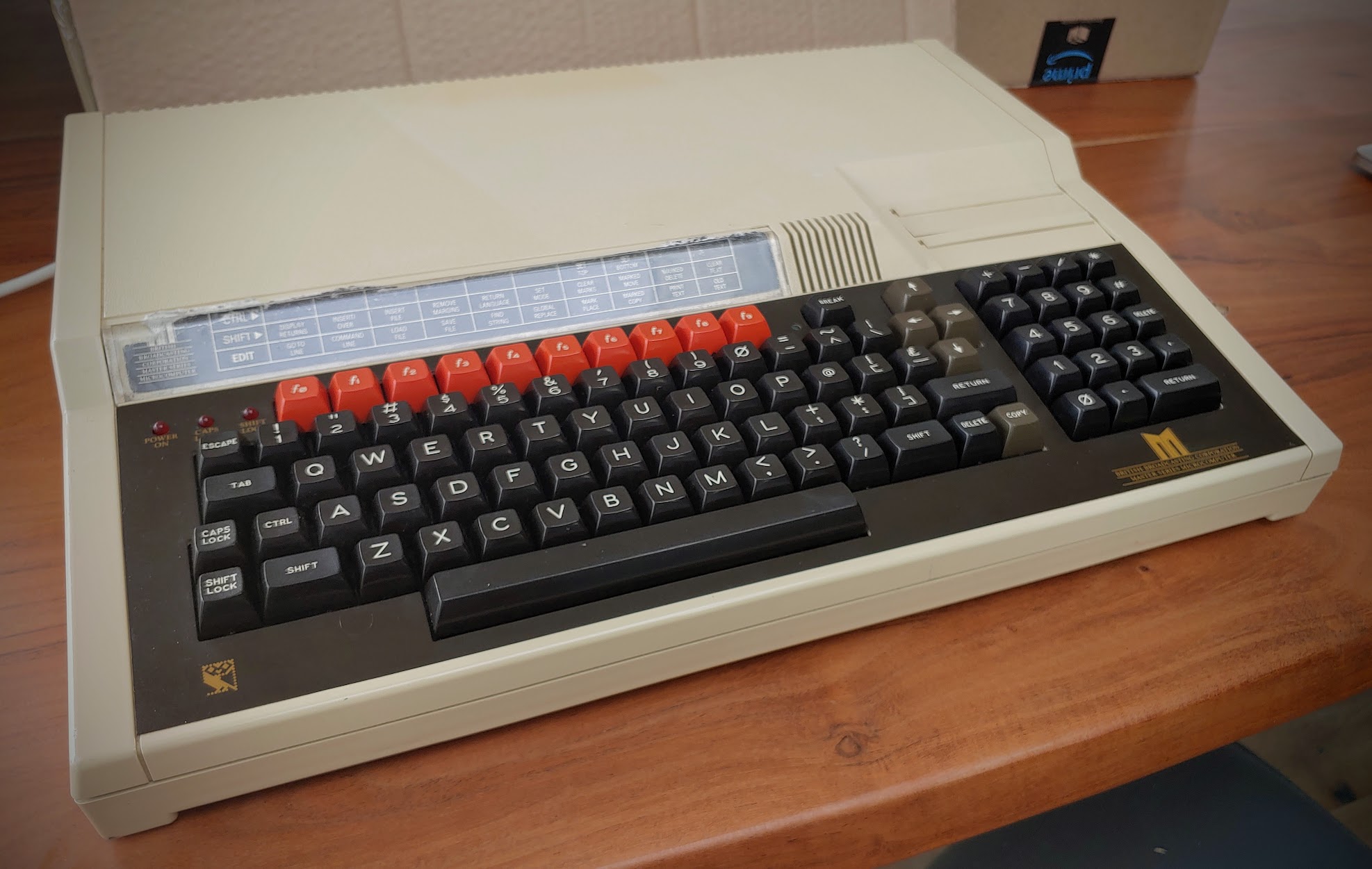
I learned to code on the school's BBC Micro by day and my ZX Spectrum by night, then wrote COBOL on IBM AS/400s at Datalink and Itex before moving into PC development, building document imaging and OCR systems for Jersey's Public Services Department and Guernsey Telecom.
Outside work I ran Black Ice, a dial-up bulletin board that grew to six lines. In 1995 I added an Internet e-mail gateway which, as far as I know, gave Guernsey its first public direct Internet connection. By 1999 most of its users had the Internet instead.
At NRG International I took the infrastructure from two NetWare servers to more than fifteen Windows servers and built the NRG Extranet, used by dealers in over 20 countries. Alongside all of this, from 1997 to 2004, I earned a degree from the Open University.
C5 Alliance, 2000–2004
A chance meeting with former Itex colleagues at TechEd led to Mark Loane, Roland Blampied, Tony Perry and me founding Contract 5, later C5 Alliance, with me working through my own Envy Technologies. I built Lloyds TSB Offshore's Internet banking, the first on TEMENOS Globus, and led a Jersey development team of fourteen. I left when the core founder wanted to stop building software and start hiring out talent.
Guernsey, 2005–2008
Back home I built a multi-jurisdiction .NET payroll package, co-founded the Guernsey Software Developer Forum with Steve Streeting and Adrian Ritchie, and released Envy Code R, a programming font whose download counter passed 700,000 before I switched it off. I was also blogging hard about .NET, which is how I got to know people like Phil Haack, Rob Conery and Brad Wilson years before I met them.
Microsoft, 2008–2011
A conversation with Scott Guthrie about the then-unreleased ASP.NET MVC led to an invitation to Redmond, then interviews for three roles. I chose LINQ to SQL, and moved on to Entity Framework as one of three engineers building Code First: a low priority then, and how most people use EF now. I pushed hard to keep it free of jargon. Later I joined a four-person team rewriting the xbox.com marketplace, and ended up responsible for security across xbox.com.
Netflix, 2011–2012
I followed my Xbox lead, Robert Sweeney, to Netflix to work on the Silverlight, Windows Phone and Windows 8 players and the RxJava server APIs behind them. Netflix measured everything, and my first two projects were reverted for not moving the numbers. Then I was given Auto-Play Next and wrote its first version. Three episodes in, it still asks "Are you still watching?"
Attack Pattern, 2011–2014
Robert and I set up Attack Pattern on the side, pitched Windows 8 apps at CES, and left Netflix when Western Digital signed on for a media app we shipped in time for the Windows 8 launch. Other work included Sticker Tales, time-shifted comments for Atari: Game Over under Elan Lee and Shane Small, and ElasticLINQ for CenturyLink Cloud, written in eight weeks. When the company turned to placing contractors, the same turn C5 had taken, I sold my shares.
CenturyLink Cloud, 2014–2016
I joined the company I'd written ElasticLINQ for as Technical Director of Software, working with Brad Wilson and Scott Densmore on cloud infrastructure and building intrusion detection in Scala and Spark Streaming.
GitHub, 2016–2018
After my twins arrived I took a short contract at GitHub to bring Windows experience to Atom: half its users were on Windows, and none of its developers were. It became a full-time role, and I stayed through Atom IDE, bringing the Language Server Protocol to Atom.
SpaceX and Auth0, 2018–2020
At SpaceX I worked on Warpdrive, their in-house ERP and the build system for rockets. I then turned down Epic Games (my Fortnite-loving son hasn't forgiven me) and joined Auth0 as a Principal Engineer across their SDKs, where I occasionally worked with the legendary Vittorio Bertocci, taken from us far too soon.
Guernsey, 2020–present
When Covid left us without childcare we moved home. I founded Intracia, consulting for a local fintech and building Crewdentials' v2 product, until MongoDB asked me to write their Entity Framework provider. A three-month proof of concept became a nine-month launch contract, and I've been working on it ever since, through EF8, EF9 and EF10.
I speak regularly at the Digital Greenhouse's Future Rewired conference, and recently ran two sold-out Claude Code sessions and a two-day course with the Guernsey Training Agency. Everything, including two Herding Code episodes, is on my appearances page.
On the record
- The MongoDB provider for Entity Framework Core, 2023–present, from conception through EF8, EF9 and EF10.
- Language Server Protocol support in Atom, GitHub, 2017–2018.
- ElasticLINQ, a LINQ provider for Elasticsearch written from scratch, 2014.
- The first Windows 8 application with in-app purchases, Sticker Tales, 2012.
- Netflix Auto-Play Next. I wrote the first version, 2012.
- Entity Framework Code First, Microsoft, 2011. One of three engineers on the original team, and Microsoft's first fluent API.
- Microsoft Gold Star award for work on Xbox, 2010.
- Envy Code R, 2006, most likely the first typeface with "Code" in the name. Still distributed through Homebrew, Nerd Fonts and Powerline.
- The first public Internet banking system on TEMENOS Globus, built for Lloyds TSB Offshore at C5 Alliance, 2000.
- Guernsey's first public Internet e-mail gateway, 1995, on my Black Ice BBS, ahead of Guernsey.NET, the local ISP run by International Computer Consultants.
Full project history: Softography.
Elsewhere
- GitHub: damieng
- LinkedIn: damieng
- Mastodon: @damieng
- Bluesky: damieng.bsky.social